 Listicle
Benefits of Hiring One Landscaping Contractor
Last Updated: November 8, 2026
Quick Summary
Hiring one landscaping contractor is usually cheaper in time and trouble than juggling several specialists, because you get one contract, one schedule, and one number to call when something goes wrong. A single contractor also carries expertise across trades, so drainage, irrigation, and planting plans do not fight each other.
- The U.S. landscaping services industry grew at a 3.0% compound annual growth rate from 2021 to 2026, so good crews are busy.
- Ask for the contractor license number and verify it before signing anything.
- Request a certificate of insurance naming general liability and workers' compensation.
- Compare estimates line by line, since the cheapest bid often leaves out removal, base prep, or permits.
- A landscaping contract should state scope, schedule, payment terms, and warranty in writing.
Table of Contents
- Why One Landscaping Contractor Beats a Crew of Specialists
- The Real Benefits: Expertise, Time Savings, and Curb Appeal
- Questions to Ask Before Hiring a Landscaping Contractor
- How to Compare Landscaping Estimates Without Getting Played
- What to Include in a Landscaping Contract
- Schedule a Walkthrough With Ironside Fence & Landscape
- Frequently Asked Questions
Why One Landscaping Contractor Beats a Crew of Specialists
Hiring one landscaping contractor for your whole project is usually cheaper in time and trouble than juggling several specialists. The IBISWorld landscaping services industry analysis reports the U.S. industry grew at a 3.0% compound annual growth rate from 2021 to 2026, so good crews are busy and harder to schedule.
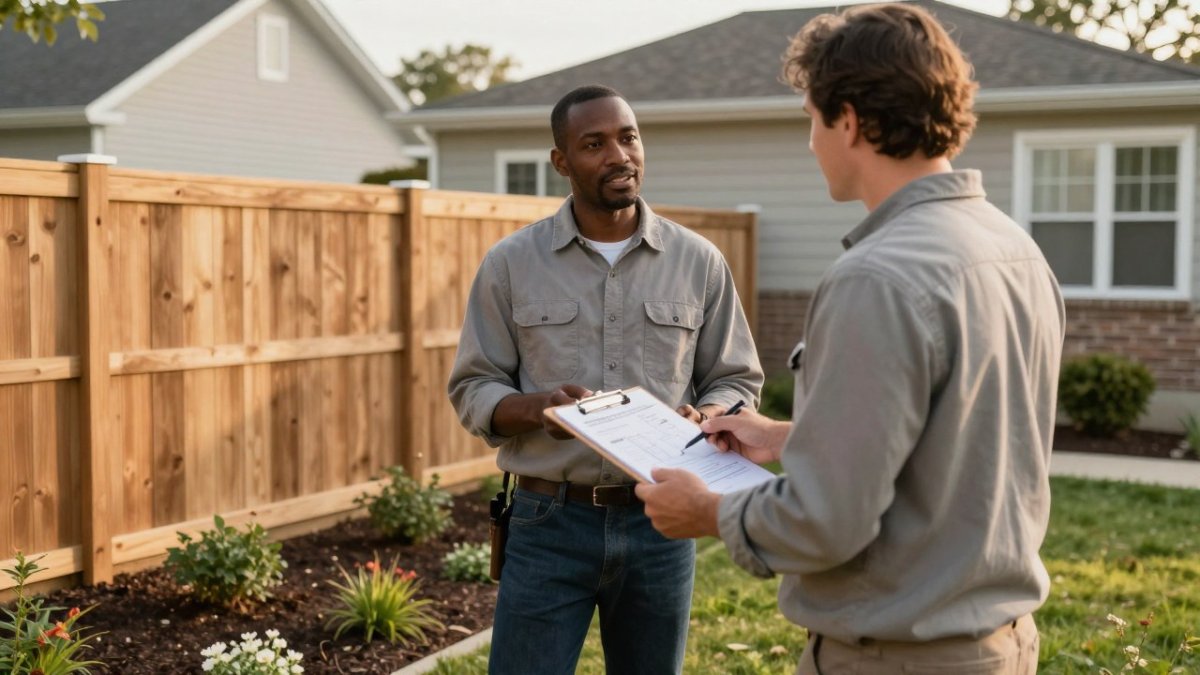
At Ironside Fence & Landscape, we offer fencing, hardscaping, irrigation, and fire prevention as a one-stop shop for outdoor needs. That matters most on jobs where trades overlap.
The handoff problem that sinks multi-vendor projects
The handoff problem is simple: when a fence crew, an irrigation installer, and a planting crew each own a slice of the same yard, someone has to coordinate them, usually you. Trenches get dug through fresh sod, fence posts land where the irrigation line was planned, and each crew blames the other. Our guide on managing multiple outdoor contractors without chaos covers keeping the schedule and blame straight.
What a single point of accountability actually buys you
Accountability means one company answers for the whole result. If a gate hangs wrong or a sprinkler zone floods a bed, there is no finger-pointing between subcontractors. You get one warranty conversation and one schedule. The National Association of Landscape Professionals industry statistics puts industry employment above 1.4 million people across 692,777 landscaping businesses, which is exactly why vetting one accountable company beats vetting four.
The Real Benefits: Expertise, Time Savings, and Curb Appeal
The practical benefits come down to three things: knowledge that fits your soil and climate, hours you get back, and a yard that looks better and holds its value. Contractor time is valuable, so wasted hours carry real cost.
Professional expertise and plant selection that survives local conditions
Professional expertise shows up in plant selection first. A thoughtful contractor considers soil, sun exposure, and drainage when choosing plants, which helps plantings hold up over time.
A single contractor also carries that knowledge across trades. The person who grades the yard sets the irrigation zones and places the fence line, so drainage and planting plans do not fight each other.
Time savings, labor, and fewer costly DIY mistakes
Time savings are real but easy to underestimate. A DIY bed rebuild can eat several weekends, and costly mistakes, wrong grading, buried irrigation lines, shallow posts, often cost more to fix than hiring out.
The less obvious time cost is coordination. Hiring one contractor means one point of contact, one schedule, and one invoice stream instead of several.
Curb appeal, property value, and long-term savings
Curb appeal is the benefit homeowners notice first, and property value follows. A clean fence line, healthy turf, and fresh mulch change how a house reads from the street. Doing the work once, with proper soil prep and matched plants, avoids repeat work. If budget is the constraint, our guide to planning landscape design on a budget shows how to phase a project without cutting the parts that fail first.
Be careful with property-value claims. Most real-estate practitioners treat landscaping as a value contributor, not a guaranteed return, and the size depends on your market, install quality, and neighboring properties. Good landscaping removes a common buyer objection; poor landscaping creates one.
Climate-appropriate design is worth considering. Native and regionally adapted plants are generally a better fit for local conditions than plants that need frequent care.
| Benefit | What It Looks Like in Practice | Where DIY Usually Falls Short |
|---|---|---|
| Expertise | Soil, sun, and drainage assessed before planting | Wrong plant for the exposure |
| Time savings | One crew, one schedule, days not weekends | Weeks of weekend labor |
| Curb appeal | Clean lines, healthy turf, fresh mulch | Uneven grading, patchy sod |
| Long-term savings | Correct base prep done once | Re-dos and replacements |
| Climate fit | Native or adapted plants, water-wise irrigation | High-water plants in dry beds |
Questions to Ask Before Hiring a Landscaping Contractor
Ask about license, insurance, warranty, and who actually does the work. Ask for the contractor license number and verify it before signing anything.
Run through this checklist on the first call:
- What is your license number, and is it active?
- Can you show a certificate of insurance for general liability and workers' comp?
- Who will be on site, your employees or subcontractors?
- What does the warranty cover, and for how long?
- How do you handle changes once work starts?
- What is the payment schedule, and how much is due up front?
What a good answer looks like
On licensing, a strong contractor gives you the number without hesitation and expects you to look it up. Confirm the license covers your specific scope, not just that a number exists.
On insurance, ask for a certificate naming general liability and workers' compensation, and to be listed as certificate holder on larger projects.
On warranty, push for specifics: what is covered, for how long, what voids it, and whether it is written into the contract.
On payment, be wary of large up-front deposits. A milestone-based schedule tied to completed work protects you far better than a calendar-based one, and it gives you leverage if the schedule slips.
How to Compare Landscaping Estimates Without Getting Played
Compare estimates line by line, not by the bottom number. The cheapest bid is often cheapest because it leaves something out: removal, base prep, permits, or plant replacement. Ask each bidder to itemize labor, materials, disposal, and warranty so you can see what you are buying.
A concrete benchmark helps. Our breakdown of wood fence installation costs shows how a real quote is structured, so you can spot a bid that skips demolition or post setting. Fair value means the scope matches the price, not that the price is lowest.
Three questions expose a thin bid fast:
- Does the quote include removal and disposal of old materials?
- Are plant sizes and quantities specified by name?
- Is the warranty written into the contract or just promised verbally?
What to Include in a Landscaping Contract
A landscaping contract should state the scope, schedule, payment terms, and warranty in writing. Verbal agreements are where disputes start. Get the following into the document before anyone breaks ground:
- Detailed scope: plant list with sizes, fence linear footage, irrigation zones
- Start and completion dates, plus weather delay terms
- Payment schedule tied to milestones, not calendar dates
- Change-order process and who approves it
- Warranty terms for plants, hardscape, and fencing
- Proof of insurance and license number
If your fence must meet local fire-prevention requirements, the contract should name the standard the work will meet.
Schedule a Walkthrough With Ironside Fence & Landscape
The fastest way to settle the one-contractor question is a walkthrough. We look at your property and talk through the scope of work with you. You get a personalized design, a clear scope, and one company accountable for fencing, hardscaping, irrigation, and fire prevention from start to finish.
We have served property owners since 2012, hold a California Contractors License, and show only photos of our own completed work. Emergency services are available within 24 hours or less in select areas.
Coordinating several trades on one yard is where budgets and schedules go sideways. Ironside Fence & Landscape handles the whole outdoor scope under one contract, from custom fencing and hardscaping to irrigation and fire prevention, with personalized designs and real project photography.
Frequently Asked Questions
Is it better to hire one landscaping contractor or several specialists?
One contractor usually wins when your project crosses trades, like fencing, irrigation, and planting. A single landscaping contractor coordinates the schedule across trades, so sequencing problems have one point of accountability. Specialists make sense for a narrow, one-trade job. For anything that touches multiple outdoor systems, one point of contact means one warranty to call and one party responsible when something goes wrong.
Can one landscaping contractor handle multiple outdoor services?
Many can, and that is the main draw. Ask directly which tasks are done in-house and which are subcontracted, then confirm who holds the license and warranty on each.
What are the benefits of hiring one landscaping contractor?
The practical benefits are a single schedule and one accountable party for the whole project. Working with one team also means one point of contact across fencing, hardscaping, irrigation, and fire prevention.
How do I compare landscaping contractor estimates fairly?
Line up the bids against the same project scope. Check whether each one lists plant quantities and sizes, soil prep, irrigation specs, mulch depth, disposal, permits, and a cleanup clause. Ask each contractor to break labor and materials out separately, confirm the warranty terms in writing, and compare the schedule commitments side by side before you decide on fair value.