 how-to
7 Tips for Managing Multiple Outdoor Contractors Without Chaos
Last Updated: November 1, 2026
Quick Summary
Managing multiple outdoor contractors starts with a written checklist covering licenses, insurance, job dates, shared areas, and one decision-maker per property. Sequence outdoor project scheduling by trade dependencies, then add access routes, staging areas, and weather cure time. Put every job in a signed scope of work and set a fixed communication rhythm before work begins.
- Confirm each contractor's license and insurance certificate before anyone sets foot on the property.
- Sequence trades: clear brush, install irrigation, set fencing, pour hardscape, then plant and lay sod.
- Pause maintenance in any zone under active construction and route crews around the staging area.
- The work excluded line in a scope of work matters most because most disputes start with unwritten assumptions.
- Give any crew lead stop-work authority when they see an unmarked utility line or unsafe trade overlap.
Table of Contents
- Start With a Contractor Project Management Checklist
- Build Outdoor Project Scheduling Around Dependencies
- Put Every Job in Writing With a Contractor Scope of Work Template
- Create a Contractor Communication Plan Before Work Begins
- Set Clear Responsibility Boundaries to Prevent Finger-Pointing
- Schedule a Walkthrough With Ironside Fence & Landscape
- Frequently Asked Questions
Start With a Contractor Project Management Checklist
Managing multiple outdoor contractors tips start with one habit: a written checklist before anyone sets foot on the property.
The jobs that go smoothly share one trait. Someone wrote everything down first.
Here is the checklist we would hand any property owner:
- Confirm each contractor's license and insurance certificate
- List every job and its start and end date
- Mark shared areas: driveway, gate, water spigot, power lines
Specialized work belongs on the list too. If your property sits in a wildfire zone, add brush mowing and fire prevention as its own line item with a firm completion date.
Build Outdoor Project Scheduling Around Dependencies
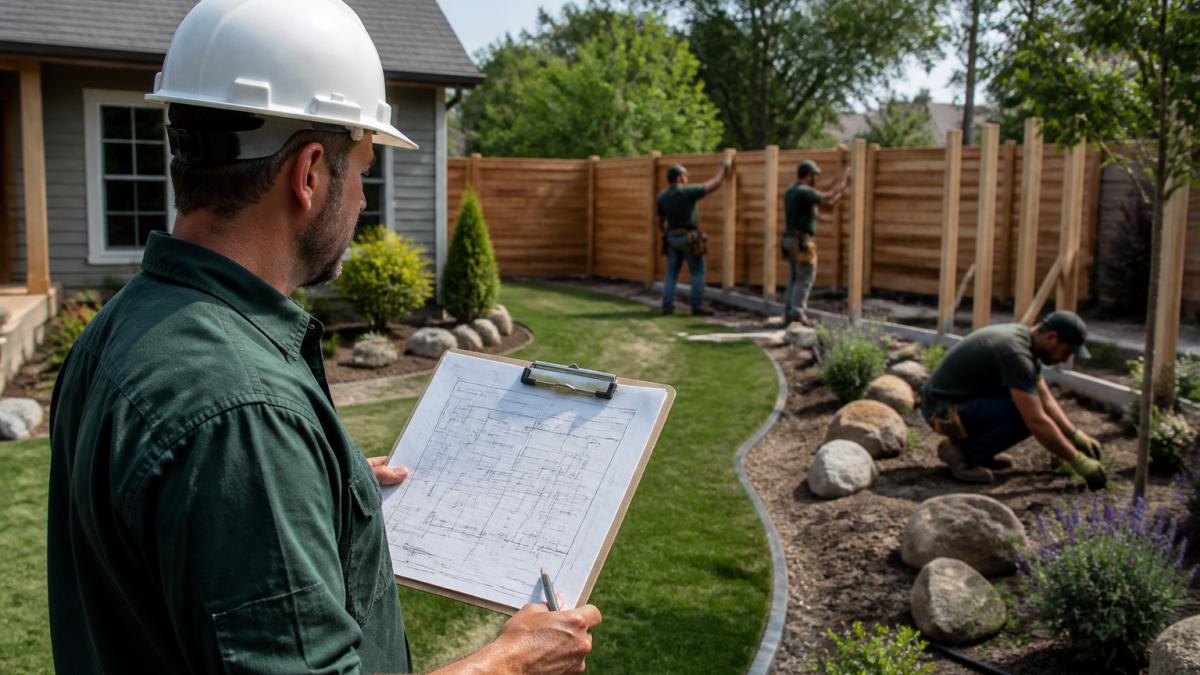
Outdoor project scheduling works when you sequence jobs by what must finish first, not by which contractor called you back fastest. Fencing usually comes before planting. Irrigation goes in before sod.
Sequence by trade, then by access
A simple order that prevents most conflicts:
- Clear brush and debris
- Install irrigation and drainage
- Set posts and fencing
- Pour hardscape and paths
- Plant and lay sod
- Schedule ongoing maintenance
That order assumes one crew at a time. When several contractors work the same week, layer in access rules. A fence crew staging panels in the driveway can block a sod delivery. An irrigation trench cut across the only gate stops the hardscape crew from reaching the backyard. Before the first crew arrives, walk the property and mark:
- One primary access route and one backup route
- A staging area for materials that does not block the access route
- Where each trade can park without trapping another crew
Most utility locating services mark lines for a limited window, often a few weeks. If your schedule runs longer, call for a refresh before any digging trade starts. A locate ticket that expired is the same as no locate at all.
Build weather and cure time into the calendar
Weather delays outdoor work more than indoor work, and one rained-out week pushes everything behind it. Two mechanisms matter more than the forecast:
- Cure and set time. Concrete, mortar, and some finishes need dry time before the next trade can work over or around them. A hardscape pour on Friday can push planting to the following week even if the weather is perfect.
- Soil moisture. Grading, sod, and fence posts set in ground that is too wet can fail inspection or settle later. A crew that shows up after a storm may need a dry day before starting, not just a clear sky.
Protect ongoing maintenance from construction
Ongoing care overlaps with project work more than people expect. Mowing, trimming, and irrigation checks still need to happen while crews are on site, and a mower running through a fresh sod area undoes the work. It helps to know what landscape maintenance covers so you can slot it around construction instead of on top of it. The practical rule: pause maintenance in any zone under active construction, and route the maintenance crew around the staging area rather than through it.
Write the schedule where every crew can see it
A schedule that lives in one person's head is not a schedule. Post a one-page version in the shared folder and text a photo of it to each crew lead. Include the trade, the start and end dates, the access route, and the staging area. When a date moves, update the page and resend it the same day.
A simple trade sequence prevents most conflicts when several crews work the same property.
| Step | Trade or task |
|---|---|
| 1 | Clear brush and debris |
| 2 | Install irrigation and drainage |
| 3 | Set posts and fencing |
| 4 | Pour hardscape and paths |
| 5 | Plant and lay sod |
| 6 | Schedule ongoing maintenance |
Put Every Job in Writing With a Contractor Scope of Work Template
A contractor scope of work template is a one-page document that states exactly what a contractor will do, what they will not do, the timeline, and the payment terms. Both sides sign it.
Copy this template:
Scope of Work Property address: ___________ Contractor: ___________ License #: ___________ Work included: ___________ Work excluded: ___________ Materials and who supplies them: ___________ Start date: ___________ Completion date: ___________ Payment schedule: ___________ Change order process: ___________ Site access and cleanup terms: ___________ Signatures: ___________ Date: ___________
The "work excluded" line matters most. If you are drafting a scope for hardscape or grading, review what landscape construction typically involves so your list is complete.
Create a Contractor Communication Plan Before Work Begins
A contractor communication plan is a written agreement on how updates flow: who gets texted, who gets emailed, how often, and who approves changes. Set it up before the first crew arrives.
Research published in a PubMed study on managing safety with multiple contractors in a shared workplace found that shared work sites with several contractors can introduce and increase safety risks because of the added complexity.
Set the channels and the cadence
Keep it simple:
- One group text thread for daily logistics
- One weekly email with photos and progress notes
- One shared folder for quotes, proposals, and invoices
Client updates should go out on a fixed day. Predictable beats frequent. A client who knows the update lands every Friday at 4 p.m. stops calling on Tuesday to ask what happened.
Use a job-site update template
A template turns a vague check-in into a record. Send this in the weekly email:
Weekly Job-Site Update Property: ___________ Week of: ___________ Work completed this week: ___________ Work planned next week: ___________ Delays or weather impacts: ___________ Open decisions or approvals needed: ___________ Photos attached: before / during / after (circle one) Next update: ___________
Keep a photo log and a contact sheet
Photos taken at the start and end of each phase settle most damage disputes before they start. Name files by date, trade, and zone so they sort in order: 2026-11-01_fence_backyard_before.jpg. A contact sheet with one row per contractor, the crew lead's name, the office number, the after-hours number, and the scope they own saves time when something goes wrong at 6 p.m. on a Friday.
Record decisions, not just conversations
A decision record is a short note of what was decided, who decided it, and when. It does not need to be formal. A shared document with a dated line per decision is enough:
11/01/2026, Approved moving the gate 18 inches east to clear the irrigation line. Approved by: owner. Contractor notified: fence crew.
When a crew later asks why the gate moved, the record answers the question without a phone call.
Set escalation rules before you need them
Escalation rules define when a small problem becomes a formal stop. A workable set:
- Same-day text for access blocks, utility strikes, or safety issues
- Next-day call for a schedule slip of more than one day
- Written change order before work proceeds for any scope or cost change
A stop-work rule sounds heavy until the first time a fence crew is about to dig where an irrigation line runs. The crew lead who can pause the job without asking permission is the cheapest insurance on the property.
Set Clear Responsibility Boundaries to Prevent Finger-Pointing
Finger-pointing ends when responsibility is assigned in writing before work starts. Name who owns each zone of the property, who repairs damage, and who pays for it.
A common mistake is assuming the general contractor covers everything. In practice, each trade owns its own work and its own damage. Spell it out:
- Fence crew: posts, panels, gates, and turf repair along the fence line
- Landscape crew: planting beds, irrigation lines, and cleanup
- Property owner: utility locating, pets, and access
If something goes wrong, the signed scope decides who is responsible, not memory.
One-stop providers can simplify this. When one company handles fencing and landscaping under one contract, there are fewer gaps between trades.
Schedule a Walkthrough With Ironside Fence & Landscape
Coordinating several outdoor contractors is manageable with a checklist, a written scope, and a fixed communication rhythm.
That is where we come in. Ironside Fence & Landscape offers custom fencing, hardscaping, irrigation, and fire prevention. We are a one-stop shop for outdoor needs.
Ready to stop juggling crews? Contact us to schedule a walkthrough and get your project on one plan.
Frequently Asked Questions
How do you coordinate schedules between landscaping and fence contractors?
Sequence the work by dependency, not by convenience. Fence installation usually goes first because digging and post setting disturb the ground, then grading, then planting and irrigation. Build outdoor project scheduling around those handoffs and give each crew a firm start date plus a buffer day. Shared workplaces with multiple contractors can introduce safety risks through complexity, so stagger crews where their work zones overlap and confirm in writing who owns site access each day.
How often should you check in with outdoor contractors?
Daily for active job sites, weekly for anything in the planning stage. A short end-of-day message covering what got done, what is next, and any blocker takes two minutes and prevents most surprises. Put that cadence in your contractor communication plan so every crew knows when updates are due and who receives them. If a deadline slips, escalate the same day rather than waiting for the next scheduled check-in.
How do you prevent disputes between contractors working on the same property?
Define boundaries before mobilization. A contractor scope of work template should state who handles site cleanup, who repairs damaged turf or irrigation lines, and how change orders get approved. Photograph the property before work starts so there is a shared baseline. When something goes wrong, the written scope and the dated photos settle the question faster than a phone call. Keep one shared folder for notes, photos, and signed documents that every contractor can access.
What is the best way to track contractor schedules, costs, and progress?
Use one shared system instead of scattered texts and spreadsheets. A simple tracker with columns for task, owner, start date, deadline, cost estimate, and status covers most residential and commercial jobs. Update it at each check-in and attach photos to completed milestones. For budget tracking, log invoices against the original quote the day they arrive.
Multiple contractors on one property is a coordination problem before it is a construction problem. Ironside Fence & Landscape removes the coordination layer by handling fencing, landscaping, and fire prevention under one contract, with real project photos and 24-hour emergency service in select areas. Get started with Ironside Fence & Landscape and put your outdoor project on a single schedule.