 blog
How to Choose the Best Residential Irrigation System Repairs
Last Updated: November 4, 2026
Quick Summary
Finding the best residential irrigation system repairs starts with reading the system's signals, since a sideways-spraying head, dry zone, or jumped water bill each points to a different part of the system. Professional irrigation repair labor runs between $55 and $120 per hour, with most homeowners paying around $90 per hour. Repair costs hinge on labor and site-specific factors like break depth, electrical troubleshooting, parts availability, and access.
- Landscape irrigation can account for 25% to 50% of total site water usage, so small leaks show up fast.
- Residential systems typically last 15 to 20 years with proper maintenance before parts get scarce.
- Upgrading older sprinkler heads can cut water usage by 30% or more by stopping overspray.
- Backflow prevention devices must be inspected at least every three years in certain jurisdictions.
- Run a full system audit before the first freeze and walk every zone at seasonal start-up.
Table of Contents
- Common Irrigation System Problems and What They Signal
- Average Cost to Repair a Sprinkler System and What It Drives
- Your Irrigation System Maintenance Checklist for Fewer Repairs
- Frequently Asked Questions
Common Irrigation System Problems and What They Signal
A sideways-spraying head, a dry zone, or a jumped water bill are three common signs of an irrigation problem, and each points to a different part of the system. Finding the best residential irrigation system repairs starts with reading those signals correctly before anyone touches a valve.
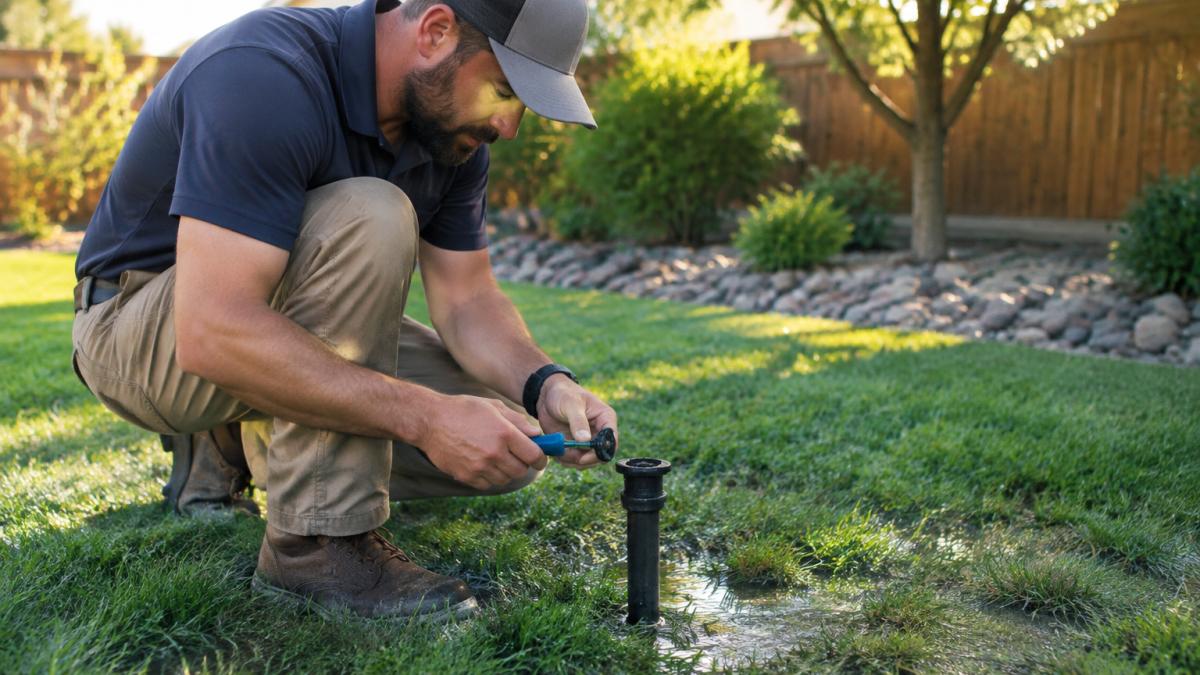
Landscape irrigation can account for 25% to 50% of total site water usage, according to the North Carolina Department of Environmental Quality water conservation data, so a small leak shows up fast on a utility bill.
Shutting off a zone at the controller does not stop water flowing to a broken main line. If the meter runs with every zone off, close the isolation valve at the backflow device first.
Our irrigation and sprinkler service covers diagnostics, valve and pump repair, and head replacement. For a valve that will not seal, the Orbit diaphragm repair kit is the part most homeowners need.
Average Cost to Repair a Sprinkler System and What It Drives
The average cost to repair a sprinkler system depends far more on labor than parts. Professional irrigation repair labor runs between $55 and $120 per hour, with most homeowners paying around $90 per hour, according to LawnStarter's sprinkler repair cost data.
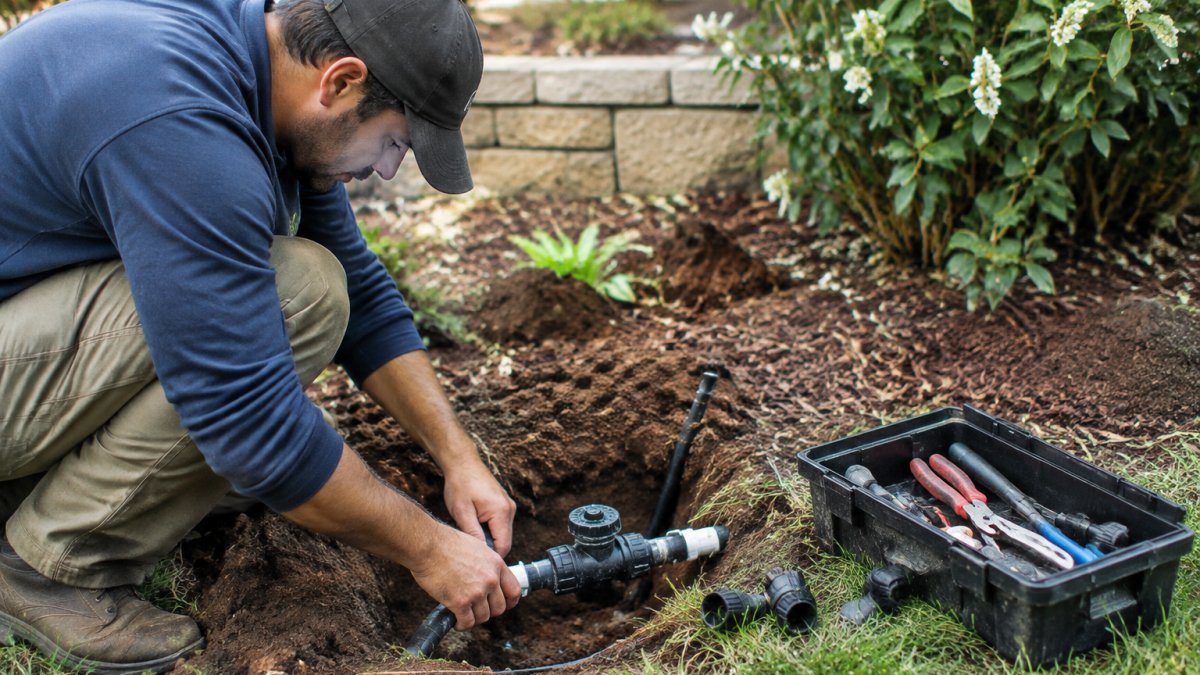
- How deep the break sits. A surface head takes minutes; a lateral line under sod or hardscape takes excavation.
- Mechanical or electrical. Zone troubleshooting on wiring and solenoids takes longer than swapping a nozzle.
- Parts availability. Older systems use discontinued heads and valves, and sourcing them adds time.
- Access. A valve box buried under mulch or a slab is slower to reach than one in open lawn.
Repairing an old system is not always cheaper. Residential systems typically last 15 to 20 years with proper maintenance, per EcoSystems NJ guidance on repair versus replacement, and past that window parts get scarce.
Once you know what your repair involves, contact us for a personalized assessment and a straight answer on repair versus replace.
Repair costs hinge on labor and a handful of site-specific factors.
| Item | Value | Note |
|---|---|---|
| Professional irrigation repair labor | $55 to $120 per hour | Most homeowners pay around $90 per hour |
| Typical residential system lifespan | 15 to 20 years | With proper maintenance |
| Water use from landscape irrigation | 25% to 50% of total site water usage | Small leaks show up fast on utility bills |
| Water savings from upgrading older heads | 30% or more | Stops overspray onto sidewalks and driveways |
| Backflow device inspection | At least every three years | In certain jurisdictions; check local rule |
Your Irrigation System Maintenance Checklist for Fewer Repairs
An irrigation system maintenance checklist is the cheapest repair you will ever do, because most failures start as small things nobody checked.
- Walk every zone and watch each head for spray pattern and direction
- Clear soil and grass from around each head so it sits flush
- Check for pooling, spongy turf, or a running meter with all zones off
- Test the backflow device and confirm the inspection date
- Clean or replace clogged nozzles and filters
- Reprogram the controller for the season and current watering rules
Upgrading older sprinkler heads can cut water usage by 30% or more by stopping overspray onto sidewalks and driveways, according to Sprinkler Warehouse on modern irrigation components.
Backflow prevention devices must be inspected at least every three years in certain jurisdictions, per Union County Water compliance guidance, so check your local rule before you assume yours is current.
If the list keeps turning up the same problems, the system may be past patching. Our landscape maintenance service catches small faults early, and a full landscape remodel can upgrade sprinklers and solve drainage at once.
A system that needs repair every season is telling you something.
Frequently Asked Questions
What is the average cost to repair a sprinkler system?
The final bill depends on the parts needed, how many zones are affected, and whether the technician has to dig up lines or replace valves. Pricing depends on the specific job, so contact Ironside Fence & Landscape through our website for current pricing or a quote. A single broken head costs far less than a buried pipe repair, so get a written service estimate before work begins.
What are the most common irrigation system problems?
The usual culprits are clogged or broken sprinkler heads, leaking valves, low water pressure, faulty controllers, and cracked pipes. Over-spraying onto sidewalks and driveways also signals nozzle adjustment or pressure regulation issues. Many of these show up as brown patches, soggy spots, or a spike in your water bill. A system audit and leak detection check can catch them before they damage your lawn.
Is it better to repair or replace an old irrigation system?
Older systems can become harder to repair as parts get scarce and repeated repairs add up. If you are facing several fixes in one season, compare the cumulative repair cost against a new installation. Upgrading sprinkler heads can help reduce overspray, which may factor into the decision.