 How-to
7 Steps to Commercial Perimeter Security Fence Installation
Last Updated: November 7, 2026
Quick Summary
Commercial perimeter security fence installation starts by translating your site's actual threats into a specification, choosing among chain-link, palisade, and anti-climb fencing. Match fence height to your risk, and plan controlled gates with access control and fail-safe emergency egress. Test every gate for manual release, power failure, and forced-entry resistance before accepting the install.
- Chain-link with 2-inch mesh and 9-gauge wire offers low cost and clear sightlines for retail lots and storage yards.
- Palisade fences are typically 7 to 8 feet tall and resist cutting far better than wire.
- A 6-foot fence stops casual trespassers, while an 8-foot fence with topping raises deterrence.
- Gates on required exit routes must open freely in the egress direction without a keypad, card reader, or power source.
- Undersized rolling gate hardware causes sagging, misalignment, and premature failure on wide openings.
Table of Contents
- Commercial Fence Types for Security: Chain-Link, Palisade, and Anti-Climb
- Commercial Security Fence Height: Choosing the Right Security Level
- Commercial Security Gates and Access Control
- Frequently Asked Questions
Commercial Fence Types for Security: Chain-Link, Palisade, and Anti-Climb
Commercial perimeter security fence installation starts with translating your site's actual threats into a commercial perimeter security specification. Chain-link, palisade, and anti-climb are the usual starting points, but the right choice depends on what you're defending against: climbing, cutting, vehicle intrusion, theft, or visibility needs.
Chain-link is a common choice, offering clear sightlines. Standard 2-inch mesh with 9-gauge wire is common; heavier 6-gauge wire and smaller mesh add cut resistance. Without added height or a security topping, it's a visual boundary more than a barrier, suiting retail lots and storage yards.
Palisade uses rigid vertical steel pales, typically 7 to 8 feet tall, with pointed or rounded tops. It creates a strong visual deterrent and resists cutting far better than wire. High-value sites such as equipment yards, substations, and logistics facilities often consider palisade, though reduced visibility can conflict with camera coverage or guard sightlines.
Anti-climb fencing removes handholds and footholds using small mesh, tight pale spacing, or curved tops. It suits sites where trespassing is a real, recurring risk, but it requires careful planning.
| Fence Type | Best For | Main Strength | Watch Out For |
|---|---|---|---|
| Chain-link | Retail lots, storage yards | Low cost, visibility | Climbable without topping |
| Palisade | High-value assets | Cut resistance | Higher cost, blocks views |
| Anti-climb | Recurring trespass sites | Climb prevention | Highest cost, needs planning |
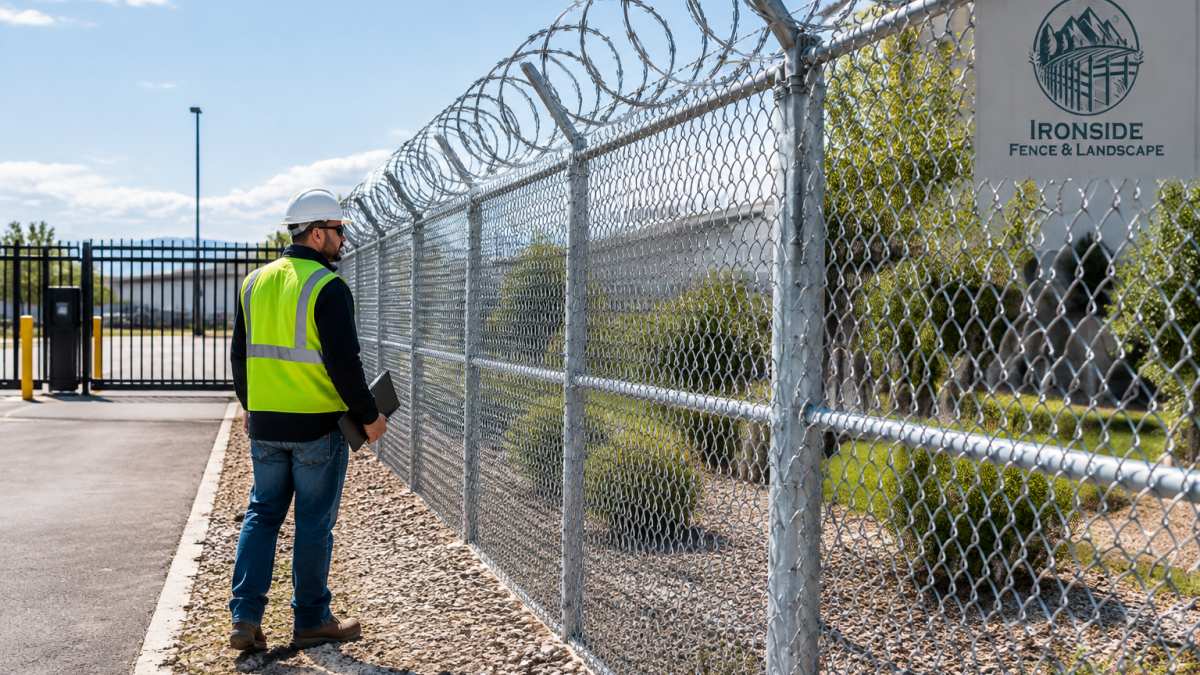
Durability should drive the material decision as much as the type. Coating choice should match the site's exposure to moisture, salt, and heat.
Watch out: choosing a fence type before completing a site threat assessment often leads to a perimeter that looks secure but fails against the specific risk.
You can browse the chain link fencing options we carry to see the actual materials and components for a commercial install. If you're weighing types against budget, our wood fence installation cost breakdown gives useful cost context.
Commercial Security Fence Height: Choosing the Right Security Level
Commercial security fence height should match your risk, not a guess. A 6-foot fence stops casual trespassers. An 8-foot fence with topping raises the barrier and the deterrence. Anything above that signals a high-security perimeter.
Height alone isn't security. Visibility, lighting, and gate placement do as much work as the fence itself.
Commercial Security Gates and Access Control
Every commercial perimeter needs controlled entry points, and gates are where most security plans succeed or fail. A strong fence with a weak gate is a locked door with an open window, so plan separate gates for employee, vehicle, and work-site access.
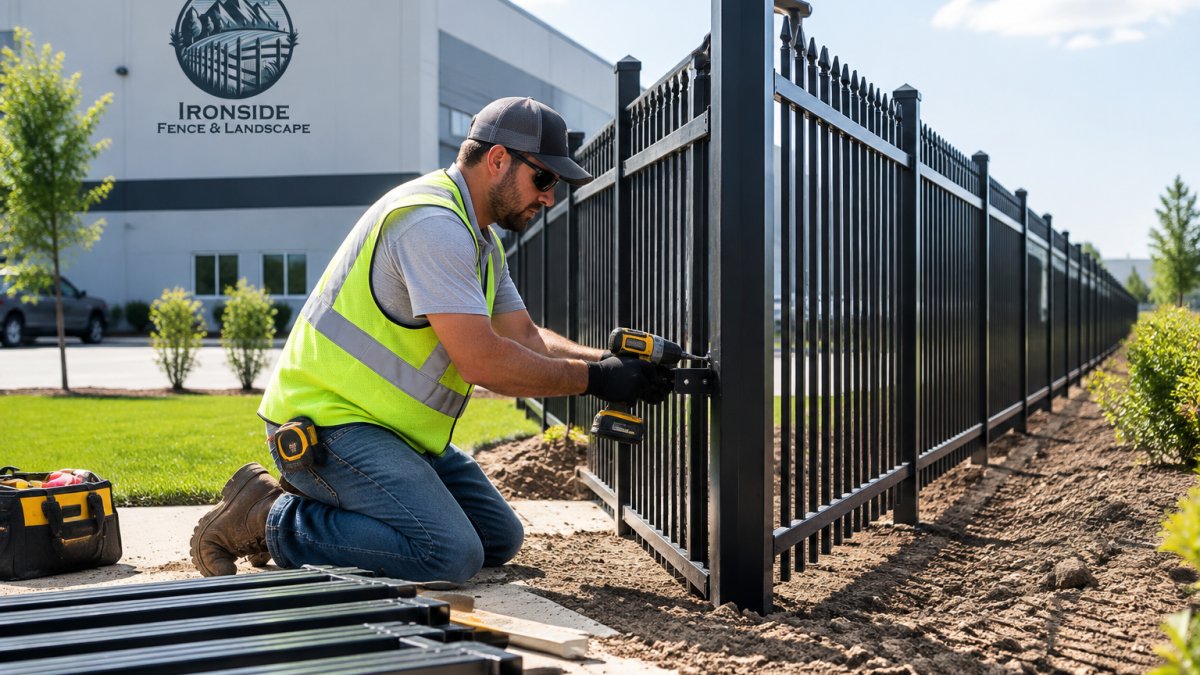
Gate hardware and sizing. Wide commercial openings work best with a rolling gate hardware kit sized for the span; undersized hardware causes sagging, misalignment, and premature failure. A walk-through access point needs a complete walk-through gate hardware kit with latch, hinges, and posts. Match gate material and coating to the fence.
Access control. Keypads, card readers, and intercoms let you track who enters and when, and should match the site's risk level. Layer controls: a card reader for employees, an intercom or video call box for visitors, and a separate vehicle gate with a loop detector or keypad for deliveries. Access-control events should feed the same system as cameras and alarms.
Life safety and emergency egress. Gates on a commercial perimeter must open freely in the direction of egress during an emergency and must not rely on a keypad, card reader, or power source to release. Fail-safe electric strikes, panic hardware, and manual release mechanisms are necessary on any gate serving an occupied building or designated exit route; check operation against applicable building and fire code.
Emergency operation and verification. Test every gate for manual release, power failure, and forced-entry resistance before you accept the install.
Watch out: installing an access-controlled gate on a required exit route without a fail-safe release can create a code violation and a life-safety hazard.
If a gate or fence fails, act fast. Our guide on emergency fence repair explains what to do first when a security perimeter is breached.
A commercial perimeter only protects your property when every part works together: the right fence type, the right height, and controlled access points. At Ironside Fence & Landscape, we've built custom fencing and security solutions since 2012, with personalized designs and emergency service within 24 hours in select areas. We show only real project photos, never stock images. Get started with Ironside Fence & Landscape and secure your perimeter with a fence built for your site.
Frequently Asked Questions
How do you plan a commercial perimeter security fence installation?
Start with a site-specific threat assessment to identify unauthorized access points and asset protection priorities. Next, verify property lines, easements, and utility locations before digging. Choose fence materials and height based on the security level you need, then confirm local permits. Plan gate placement for vehicle and employee access, and integrate access control with your broader security plan. Finally, schedule installation in phases to avoid disrupting operations.
What type of fence is best for commercial property security?
The best choice depends on your risk profile. Chain-link fencing offers visibility and deterrence at a lower cost, making it suitable for many commercial sites. Palisade and anti-climb fencing provide higher security for industrial properties or areas prone to intrusion. For maximum protection, combine a durable perimeter fence with commercial security gates and access control. A professional assessment can match the fence type to your specific site and security goals.
How tall should a commercial security fence be?
Commercial security fence height typically ranges from 6 to 8 feet for standard deterrence, while high-security applications may use 10-foot or taller fences with anti-climb features. Local zoning codes and fire regulations may limit height, so check with your municipality before finalizing plans. The right height also considers visibility requirements and the need to prevent climbing. A site-specific assessment ensures compliance and effectiveness.